
Repression against trade unions in Belarus and the threat of authoritarianism discussed in Hanover
An event dedicated to political repression in Belarus, imprisoned trade union activists and the role of international solidarity was held in Hanover. The meeting was organised by the German trade union IG BCE and Salidarnast e.V.

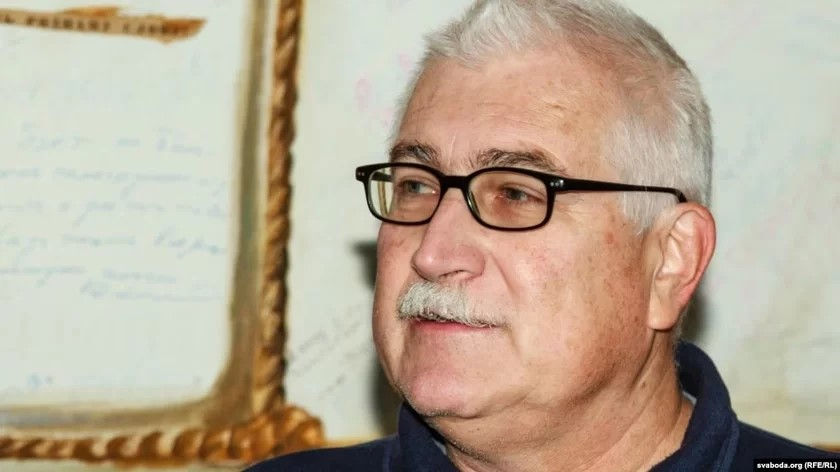
One of the main speakers was Aliaksandr Yarashuk, Chair of the Belarusian Congress of Democratic Trade Unions (BKDP), who himself experienced arrest and imprisonment. Today, more than 800 political prisoners remain behind bars in Belarus, 20 of them trade union leaders and activists.
In his speech, Yarashuk stressed the importance of international trade union solidarity and called for unity: “The forces of good must unite in the same way as the forces of evil unite.”
Birgit Biermann, Deputy Chair of IG BCE, praised Aliaksandr Yarashuk’s courage and said: “Those who attack trade unions attack all of us.”

She also called for the immediate release of all political prisoners in Belarus. According to Biermann, solidarity cannot be reduced to a single media headline or a post on social media. Solidarity is a much broader and longer-term process that knows no borders.
She also highlighted the work of Belarusian trade union activists in preserving and supporting the independent trade union movement and stressed the importance of German trade unions supporting their Belarusian colleagues.
Following the official speeches, a discussion took place involving Hannes Kühn, International Secretary of IG BCE; Ernesto Harder, Chair of the DGB in Lower Saxony and Saxony-Anhalt; and Aliaksandr Yarashuk, Chair of the BKDP.

The BKDP Chair spoke about the conditions in which political prisoners are being held in Belarus. According to him, prison administrations treat people convicted of serious criminal offences better than political prisoners.
Yarashuk also said that he owes his freedom today not to political agreements, but to international trade union solidarity:
“I am free not because of deals between Trump and Lukashenka, but because of my trade union brothers and sisters.”
Harder stressed that the BKDP and Salidarnast continue to do everything possible to secure the release of political prisoners. He also recalled how emergency support was organised in 2022 for Belarusian trade unionists who were forced to leave Belarus, and noted the swift response of the Bremen authorities.
The discussion about Belarus took place in the broader context of political developments in Germany, including the results of the elections in Saxony-Anhalt and the growing support for the AfD.

Asked what had led Belarus towards authoritarianism, Aliaksandr Yarashuk gave a brief answer: “It is simple — populism.”
Dr Harder, speaking as both a historian and a trade union leader, noted that history does not repeat itself literally and that Germany today cannot be compared with Weimar Germany in the 1930s. However, he said that German society can learn from the Belarusian experience.
He stressed that freedom requires constant work and that trade unions and civil society must use every available instrument to defend it — from public mobilisation to international mechanisms, including at UN level.
Harder also drew attention to the scale of the work carried out by Belarusian trade union activists: despite the organisation’s small size, it conducts international work and raises the problems facing Belarus’s independent trade union movement on international platforms.

Aliaksandr Yarashuk recalled that independent trade unions in Belarus were never a mass phenomenon with millions of supporters. However, in 2020, workers began leaving the state-controlled Federation of Trade Unions of Belarus (FPB) in their thousands, and more and more people came to see independent trade unions as a genuine alternative.
For Yarashuk, the conclusion remains unchanged: in a world of social injustice, independent trade unions are essential as an instrument for defending workers’ rights and interests.
At the end of the meeting, participants expressed the hope that the next such gathering would take place in Belarus, where it would be possible to discuss trade union issues and the future of the independent trade union movement freely.



Comments