
How IG Metall is recruiting Eastern European residents of Bremerhaven into the trade union
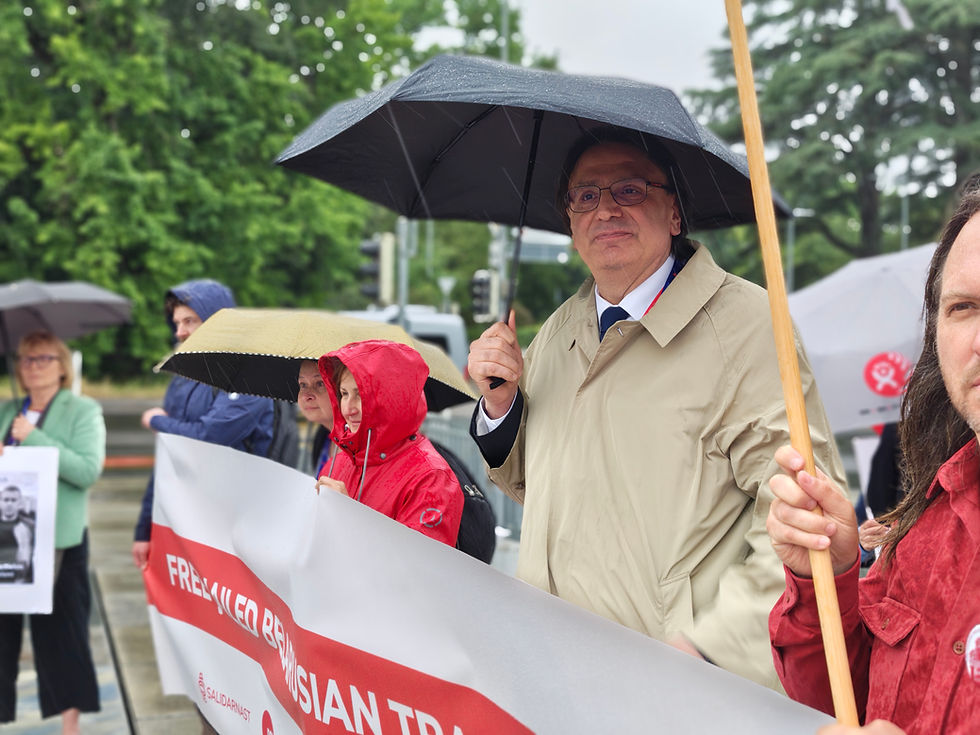
On 7 August, representatives of the local IG Metall branch in Bremerhaven held an information picket aimed at engaging Ukrainian and Russian-speaking residents of the city with the trade union movement and informing them about ways to protect their rights and interests at work. Representatives of Salidarnast e.V., an association of Belarusian independent trade unionists in exile, also took part in the action.
Around a dozen trade union activists and leaders distributed IG Metall information materials and spoke with passers-by. The main objective was straightforward: to explain why workers need a trade union, what kinds of workplace problems they can seek support with, and what opportunities collective representation can provide for protecting their interests.
The action was organised by Felix Groel, trade union secretary of IG Metall Weser-Elbe, and IG Metall trade union activist Ivan Ovsyannikov. The event was, in a sense, an experiment: German trade unions are trying to find more effective ways of reaching Ukrainian and Russian-speaking workers, many of whom remain wary even of the word “trade union”.
For an hour and a half, the activists spoke with local residents, answered questions and explained how a genuine trade union differs from the post-Soviet structures familiar to many people from the region.
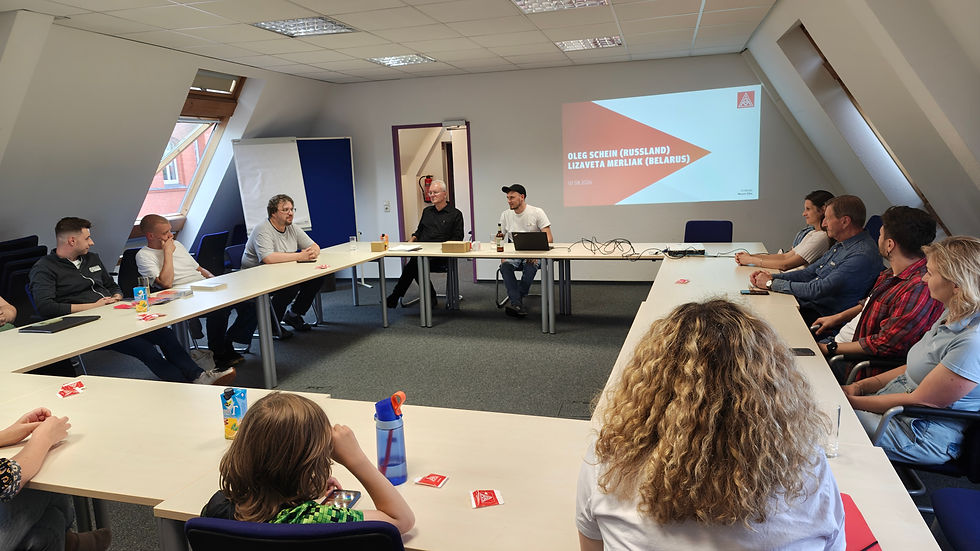
Following the picket, a round-table discussion was held at the Bremerhaven Trade Union House. It brought together representatives of local NGOs, activists from the German trade unions IG BAU and ver.di, as well as trade unionists from Eastern European countries.
Oleg Shein, one of the leaders of the Confederation of Labour of Russia, and Lizaveta Merliak, Executive Director of Salidarnast e.V., spoke about the situation regarding workers’ rights in their respective countries and the prospects for the labour movement.
Aliaksandr Yarashuk, President of the Belarusian Congress of Democratic Trade Unions, also offered his assessment of the situation. He noted that the low level of interest among Belarusians in joining trade unions is largely connected to the legacy left by the Soviet trade union system. Today, he said, the same tradition is continued by the pro-government Federation of Trade Unions of Belarus, into which up to 95% of the country’s workers have been administratively pushed.
For this reason, many people from Belarus, Ukraine and other countries in the region still associate trade unions not with workers’ self-organisation, collective bargaining and the protection of their rights, but with a bureaucratic structure attached to an employer or the state.
For German trade unions, this represents a serious challenge. Hundreds of thousands of workers from Eastern European countries live in Germany, and a significant proportion of them remain outside the trade union movement.
The action in Bremerhaven was an attempt to understand how to communicate with this audience in language that resonates with them, and how to restore the real meaning of the word “trade union” — workers organising collectively to defend their own interests.



Comments