
“The Idea of Solidarity Cannot Be Suppressed”
Updated: Oct 29, 2025
After the dissolution of independent trade unions in Belarus, the “Salidarnast” Association became the voice of workers and a platform for the idea of building a democratic society.

Recently, the “Salidarnast” Association – founded by Belarusian trade union activists who were forced to leave the country – was taken over by a new leader. Pavel Sakalouski, formerly one of the leaders of the Belarusian Independent Trade Union at “Belaruskali,” told gazeta.by that the association will continue to pursue the same goals it has had since its inception:
“First and foremost, we inform our international partners about the situation of trade union activists who are imprisoned in Belarus, and we fight for their release (currently 20 people).
We also maintain close cooperation with the International Trade Union Confederation and other international organizations, participating in all meetings to continue advocating for the release of our comrades and colleagues.
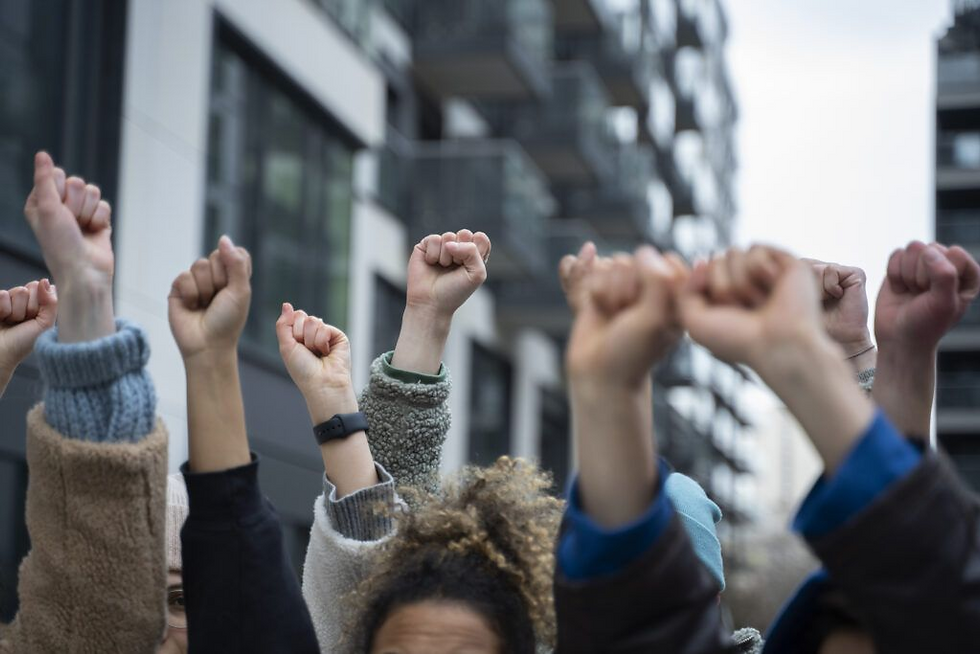
In 2020, Lukashenko was frightened by what the independent trade unions demonstrated – people’s solidarity. My colleagues and I believe this was one of the reasons for the destruction of independent unions in the country. The authorities saw that people could unite and stand up for their own views.
That mission remains today. To show Belarusian workers that only their solidarity and mutual support can lead to change. Yes, they cannot currently unite or defend their interests, because the pseudo-unions represented by the FPB (Federation of Trade Unions of Belarus) cannot provide that.
Of course, people are scared, they’ve been intimidated, repression continues, and every day the regime grabs someone – often not just one or two people, but many more. But the idea of solidarity itself cannot be suppressed.
We promote the idea of creating independent trade unions in Belarus when democratic reforms begin in the country. When it becomes possible to show Belarusians that they have this mechanism – the creation of independent organizations that truly defend their rights, rather than being embedded in the repressive state system like the FPB is now.

Moreover, we are recognized by all organizations in the international trade union movement. We promote our ideas through information published in various independent outlets, including online media, our own websites, and social networks.
Naturally, questions arise: can we really change anything? But when you look at what’s happening in the country, those doubts disappear. In essence, every election since 1994 has been rigged. If Lukashenko felt that he had the support of the majority of citizens, he wouldn’t have done that.
We clearly see that he doesn’t have such support, and since this person is afraid and removes his opponents by force, it means that what we’re doing is effective, and it affects him too. Otherwise, independent trade unions and other civil society structures wouldn’t be destroyed.”
Siarhei Antusevich, Vice-President of the Belarusian Congress of Democratic Trade Unions that closely works with “Salidarnast”, believes that without the association, the mission of freeing political prisoners would be impossible:
“When I joined this work a year ago, I was impressed by the scope of tasks that had already been accomplished and those planned for the future. I can say it’s serious, systematic, and highly responsible work.
Of course, it’s easy to criticize – but it’s easier to criticize when you’re doing nothing or not even trying. I’m not ashamed of my colleagues or myself, because a lot has already been done, although we can’t talk about everything just yet. This includes efforts to free political prisoners and the work we’re doing to return home as soon as possible.

The issue of restoring freedom of association in Belarus is both global and deeply practical, because it affects the lives of those Belarusians who left the country after 2020.”
Lizaveta Merliak, a member of the “Salidarnast” Association, emphasized that the mission of the organization is to help build a democratic society in Belarus based on principles of social justice and decent labor:
“When I was forced to leave Belarus, I immediately began thinking about how to continue the work we had been doing for many years. So that our cause wouldn’t be lost, and so that independent trade unions could exist in Belarus. And until that happens, we see our main task as bringing that time closer and doing everything possible to make it happen.
If you look at human history, eras don’t change in 10, 15, or even 20 years. We understand this well and are committed to serious and long-term work. Personally, I never give up – there’s always a way, like taking a few steps to the side and continuing the work from another place.
For example, one of our areas of work is education. We have a very good online course available for free that explains what’s wrong with labor conditions in Belarus. You can listen to lectures, read various materials, and watch short videos that explain in simple terms what a real trade union is – not a pseudo-union like the FPB – what forced labor is, and what a minimum wage means.”
Maria Taradetskaya, a member of the “Salidarnast” Association, believes that one of the organization’s main tasks is to create, sustain, and spread an alternative – something Belarusians are currently deprived of, including an alternative voice that speaks the truth about what’s happening:
“Citizens of our country are deprived of this alternative on many levels – at the level of government and even at the level of trade unions that are supposed to genuinely protect workers’ rights. The state is comfortable with the absence of such an alternative. Belarusian society, every group within it, is forced into certain confines, not even allowed to consider that there could be another way. That’s why, for me personally, it’s very important that people see: yes, there is a choice, things can be different, they must be different.
This happens in various ways, including by challenging the regime’s blatant lies on international platforms, or by presenting an alternative perspective on the violations of every conceivable international standard.
For example, the idea that a trade union cannot be a tool of state propaganda or part of a government machine carrying out ideological tasks. Its role is to defend workers’ rights first and foremost – not the interests of employers or the current authorities. It should stand with the worker, not obediently sign off on the dismissal of those deemed unreliable by the current Belarusian regime. Or take the issue of social dialogue – in Belarus today, there’s only a simulation of such dialogue.
All these puppet structures like the FPB exist solely to help Lukashenko promote his myth of a social state. Everything looks great on paper – financial indicators, workers’ rights – but according to the Global Rights Index prepared by the ITUC, Belarus is currently among the ten worst countries in the world for workers’ rights.
Sometimes certain areas of our work don’t succeed, and that’s normal. I’m quite realistic about the kind of government we’re dealing with, its historical and cultural background, and the current social system. But my work is a conscious choice.
Today, the issue isn’t just that human rights are being violated in Belarus, or that people are being repressed and arrested for having alternative views, or that the country lacks real trade unions, or that it’s embroiled in a serious conflict, or that it’s under an authoritarian regime. We’re talking about crimes against humanity.
Since 2020, a great deal of blood has been shed in Belarus, and so many precedents have been set that we cannot ignore them. We must document them. This is a vast field of work. We need to identify these precedents, understand how they came about, why it happened, what’s broken, and how things should function in a normal society. And this must be done at every level – from the family to the broader social sphere. It’s crucial right now to show what’s happening and to call things by their proper names.”


Comments